Xome
Real Estate Technology
Senior UX Designer (Sole Designer, Lead)
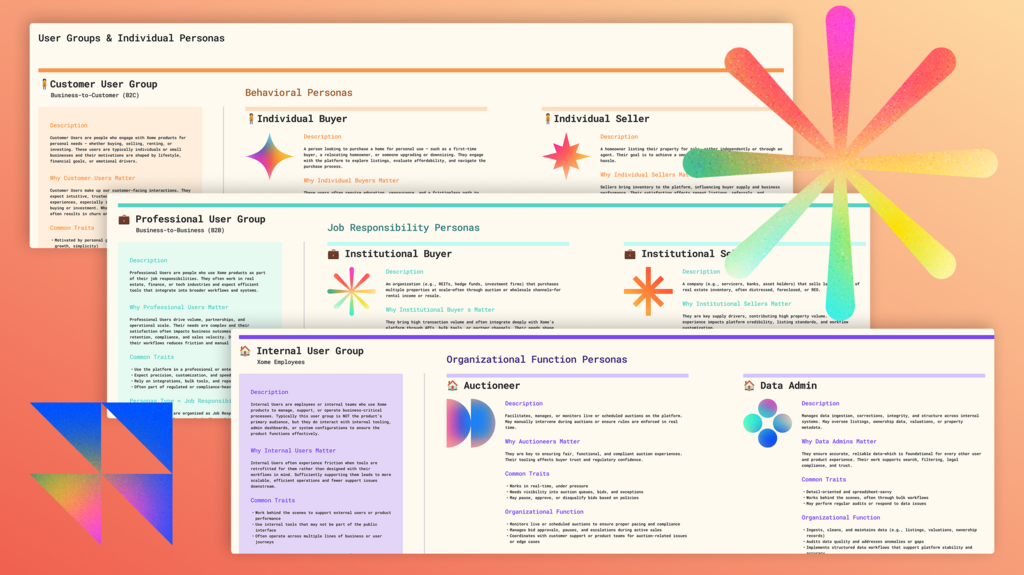
When empowered to tackle a project of my choosing, I decided on my team's historical need for a personas system. With a variety of audiences for different areas of the business, I knew my personas system needed to be flexible, usable, and inclusive.
My colleagues' brains were full of knowledge on the users they interacted with every day, but although the knowledge existed it was fragmented and disjointed. We didn't have a central library to reach for during project kickoffs, so we didn't always have a clear answer when we asked the important question of, "Who are we designing for?"
My goals were clear:

Before I gathered my colleagues, I wanted to create an initial foundation to help reduce the cognitive load that inherently happens when working on foundational artifact creation.
I put together a base of information, including example user types and personas, so my colleagues would have thought-starters for discussion.
I decided to divide my colleagues into small groups of 2 – 3 with a mix of leadership and individual contributors in an effort to facilitate nonhierarchical discussions where everyone felt comfortable bringing their knowledge and ideas to the table.
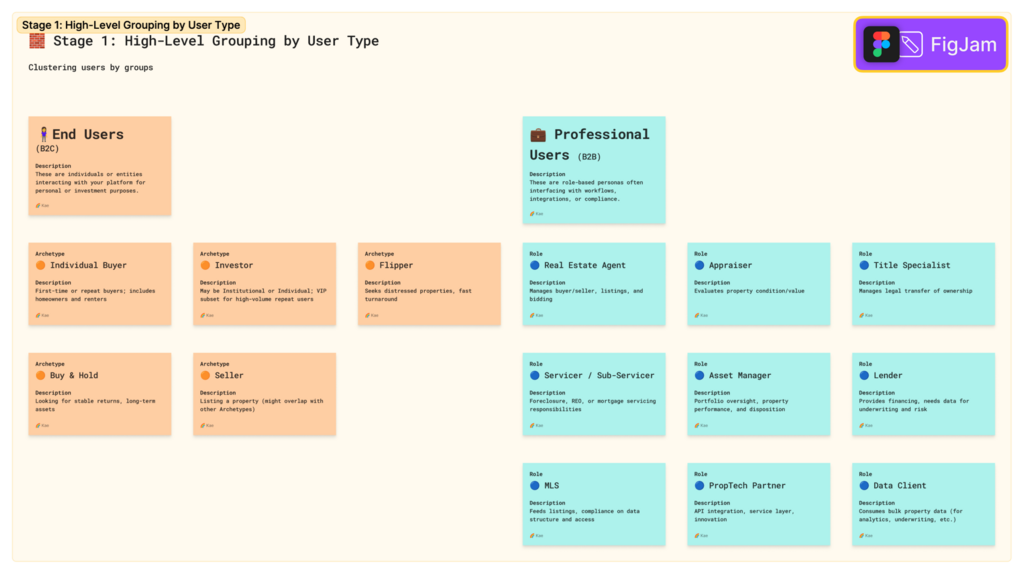
With my base artifact ready and my colleagues divided into their groups, I conducted 5 – 6 small-group sessions, giving all of my colleagues the opportunity to share information, experiences, and assumptions about their users from each colleague's area of expertise within the business.

During our collaborative small-group sessions, we refined the two original user groups, added a third user group, and built out all 28 individual personas divided across each user group.
My exploratory work for this project started out in the direction of traditional personas, but quickly warranted a persona matrix approach, where multiple persona profiles could apply to the same user, creating a richer understanding of the people that use our products.
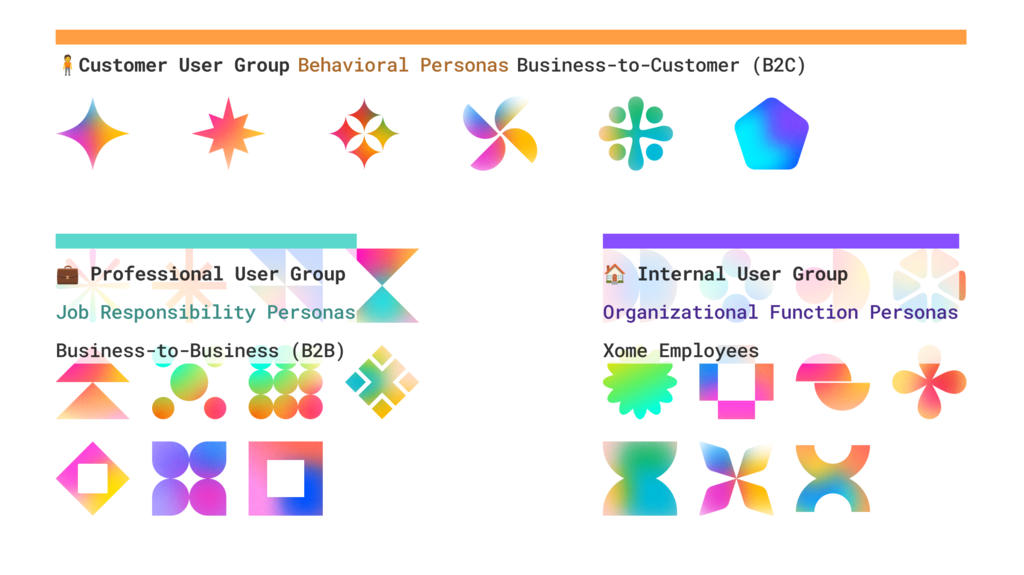
After all the collaborative sessions were done, I added vibrant iconography that was inclusive and non-biased. The person system was quickly adopted by internal teams and rapidly deployed to aid in making sense of our users! I received positive feedback from colleagues who kept reaching for this document, team alignment improved, and I received requests to create additional internal sense-making documents.
I'm really glad I took on this project. It was a lot of fun to work on and the excitement and validation from my colleagues made it worth the effort.
I think my approach to the non-hierarchical, small-group workshops was incredibly successful and I will continue to conduct collaborative sessions in a similar way in an effort to break down silos of leadership and technical roles.
It's always a great feeling to see people relax during discussions and candidly share how they feel. One of the biggest joys of the work that I do as a UX designer is bring people together in collaboration and give them a space to share what's been weighing on them. It almost always leads to subsequent discussions that have much more positive vibes and great collaboration!
This project was a great demonstration of how complex, unwieldy information can be transformed into something clear, usable, and visually approachable. This experience reinforced my value of the important of strong design thinking beyond screens and interfaces.